Get Legal Today with Same Day Service from Michigan’s Largest & Most Respected Certification Clinic
Posted on | June 23, 2012 | No Comments
Get Legal Today with Same Day Service from Michigan’s Largest & Most Respected Certification Clinic
Get your Michigan Medical Marijuana Card Today! Professional locations in Grand Rapids and Ann Arbor. Friendly medical staff with years of experience here to assist you.
Reputable board certified, Michigan licensed physicians, discreet, real medical office location, convenient access, best pricing in town. Expert advice regarding MMMP and paperwork.
Also ask about our beginner and master grow classes forming now.
Call today for an appointment, today at 866-649-9034
********** Limited appointments available….CALL NOW**********
Since 2009 we have helped over 24,000 patients get legal who were suffering from: Severe Chronic Pain, Seizure Disorders, Hepatitis C, Glaucoma, Chronic Muscle Spasms, AIDS/HIV, Crone’s Disease, Parkinson’s, Disease, Chronic Nausea, Asthma, Multiple Sclerosis, Cachexia, Cancer, IBS and Arthritis.
New Hampshire Governor John Lynch Blatantly Violates Thousands of Terminally Ill Patients’ Rights Out of Spite
Posted on | June 22, 2012 | No Comments
Concord, NH — June 22, 2012. In a rebuke to the New Hampshire state legislature and thousands of patients, Governor John Lynch vetoed medical marijuana legislation yesterday for the second time since 2009, despite strong legislative and popular support. SB 409 passed the New Hampshire House by an overwhelming vote of 236-96, more than the two-thirds needed to override the governor’s veto. However, because of a narrower margin in the senate, an override is less certain. SB 409 would protect the right of qualifying patients to cultivate their own medical marijuana or designate a caregiver to cultivate it for them, and would limit possession to 6 plants and 6 ounces of dried marijuana.
“We applaud the New Hampshire legislature for trying to meet the health care needs of thousands of its citizens,” said Steph Sherer, Executive Director of Americans for Safe Access, the country’s largest medical marijuana advocacy organization. “Unfortunately, a departing governor with an axe to grind is getting in the way of this important and popularly supported legislation. We’re now calling on the legislature to rise to the occasion, and override the governor’s veto.”
Advocates were successful during deliberations to incorporate patient cultivation into the list of enumerated rights, something common to most state medical marijuana laws, but absent from the more recent laws passed in Connecticut, Delaware, New Jersey, and the District of Columbia. In states without patient cultivation, implementation has lagged thereby causing the rights of thousands of otherwise qualifying patients to be denied. The sluggish pace of implementation is also due in part to threats of criminal prosecution being made by the Obama Administration.
Advocates in New Hampshire also pushed for and achieved the passage of other amendments to SB 409, such as one that would protect organ transplant patients against discrimination. Purging medical marijuana patients from transplant lists is a common practice at transplant centers across the country, including the internationally renowned Cedars-Sinai Medical Center in Los Angeles.
SB 409 originally called for “Alternative Treatment Centers,” centralized regulated facilities where patients could safely and legally obtain their medication. This provision, however, was stricken from the bill during deliberations. States with older medical marijuana laws, such as California, Maine, Vermont, and Washington, which originally excluded distribution systems, have either recently adopted or are trying to pass amendments that recognize that need.
The passage of SB 409 and Governor Lynch’s veto comes as Connecticut adopted a law earlier this month, making it the 17th medical marijuana state. Medical marijuana laws have been passed in the States of Alaska, Arizona, California, Colorado, Connecticut, Delaware, Hawaii, Maine, Michigan, Montana, Nevada, New Jersey, New Mexico, Oregon, Rhode Island, Vermont, and Washington, as well as Washington, D.C.
Further information: SB 409: http://www.gencourt.state.nh.us/legislation/2012/SB0409.html
Source: http://www.safeaccessnow.org
Rick Simpson’s Run From The Cure Video – Full Version
Posted on | June 22, 2012 | No Comments
Our wellness center has helped over 400 patients diagnosed with cancer. Our founding members along with current and previous patients and caregivers all have had experiences with someone close to them who was diagnosed with some sort of cancer.
This is the Rick Simpson story, “Run From The Cure”
After much debate over the type of controversy, several consultations with our attorney, and consideration for our patients we have decided to promote Rick Simpson’s Hemp Oil extraction method.
The video has been embeded in this post but a link can be found below where you can view this exact same full-length presentation on Rick Simpson’s own website Phoenix Tears.
This video can be found on Rick Simpson’s own website here: http://phoenixtears.ca/video-library/
Medical marijuana brings relief for sick kids in Michigan but the treatment is controversial
Posted on | June 15, 2012 | No Comments
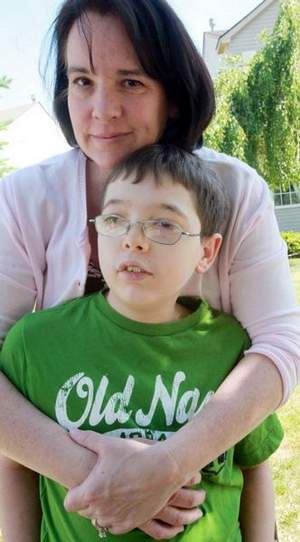
Rebecca Brown, 48, gives her son Cooper, 14, medical marijuana to control seizures. / REGINA H. BOONE/Detroit Free Press
LANSING — Rebecca Brown says she tried every prescription drug she could find to control the frequent seizures her son suffered because of a severe form of epilepsy.
When nothing worked consistently, and the drugs and special diet caused kidney stones and pancreas problems as side effects, the Oakland County woman turned to medical marijuana.
Now, Cooper Brown, 14, is one of 44 Michigan residents younger than 18 with a medical marijuana card. His mom says his seizures have dropped off dramatically since he started using it early this year.
But the treatment is controversial. Marijuana — medical or otherwise — is illegal at the federal level and some doctors say it shouldn’t be used by adults, let alone children. A lack of clinical studies means there is uncertainty about its effects on developing brains and nervous systems.
Though still in middle school, Cooper is not the youngest child on the state’s medical marijuana registry. A 7-year-old, two 9-year-olds, an 11-year-old, and a 13-year-old can also legally possess and consume medical pot in Michigan.
State officials won’t disclose the children’s medical conditions. They say they don’t know whether the kids smoke the drug or take it some other way, such as in a baked good, a liquid extract called a tincture, or by using a vaporizer.
Parents say they’ve successfully used medical cannabis to treat their kids for Dravet Syndrome, which Cooper has, as well as autism, attention deficit disorder, muscular dystrophy, and the pain and nausea of cancer, among other ailments.
Brown said she would never let Cooper smoke marijuana. Instead, he eats it in food she prepares for him.
Brown would not identify her supplier but said she searches out cannabis that laboratory tests show is low in THC (tetrahydrocannabinol), the compound which provides the marijuana high, but with elevated levels of a lesser-known compound, CBD (cannabidiol), which has antiseizure properties.
Brown said in an interview with the Free Press that she might face criticism for going public but hopes she can help even one family lessen the stress and suffering that she and her family have endured.
“This isn’t something we entered into lightly,” Brown said. “I’ve done a lot of reading and a lot of research. I have everything tested.
“I am not a pot smoker and never in a million years thought of trying this,” she said. “But when your child is suffering and you feel desperate, you consider things you may not have before.
“Parents, when their kids are healthy, they take it for granted.”
Doctors’ permission
Brown first had to convince her skeptical husband. Because Cooper is younger than 18, Michigan law required her to get not one, but two doctors — Cooper’s pediatrician and his neurologist — to sign off on him using it.
Like Michigan, most states that have legalized medical marijuana don’t require users to be at least 18. Only Delaware, and now Connecticut, which this month became the 17th state to legalize it, have such a requirement, said Morgan Fox, a spokesman for the Marijuana Policy Project in Washington, D.C.
Dr. Tom George, a practicing physician and former Republican state senator from Kalamazoo who voted against Michigan legalizing medical marijuana in 2008, said there are no absolutes in medicine but an effective prescription treatment is almost always preferable to herbal marijuana.
Michigan, which has more than 130,000 adults on its medical marijuana registry, should amend its law so the drug can be used only for a limited number of specific conditions — not any time a doctor gives the OK — he said.
George, who unsuccessfully sought the GOP nomination for governor in 2010, said his concerns are heightened when it comes to use by children, though he’s not sure that should be banned.
“I don’t think we know in growing nervous systems what effects it might have,” George said.
In the case of the Brown family, “I like the fact that he’s not smoking it,” and “it sounds like she’s done her homework,” George said.
“It’s hard to know what to say based on anecdotal cases.”
The American Academy of Pediatrics doesn’t have a policy on medical cannabis, though it’s working on developing one, officials said.
Nearly three-quarters of Michigan medical marijuana users who are minors are either 16 or 17 years old. Similar high school-age concentrations of underage users in other states have prompted concerns about students using medical marijuana cards to supply the drug not just to themselves, but to their friends.
It’s a worry even for some proponents of medical pot, such as the Eugene, Ore., man who writes the Weed Blog under the pen name Johnny Green.
“I think it’s kind of unusual that in a part of the country where there’s a high prevalence of abuse of the program, there’s also a high prevalence of teenagers getting their medical marijuana cards,” Green said, in reference to Oregon.
Green, 31, who would not give his real name and said he uses medical cannabis to treat his tendinitis, said minors should face stricter controls than adults in getting medical marijuana cards. He said he likes the fact that Michigan, unlike Oregon and most other states, requires not one, but two doctors’ signatures.
Farmington Hills attorney Robert Mullen, spokesman for the Michigan chapter of the National Patients Rights Association, which favors testing requirements and improved controls over medical marijuana, said he also favors Michigan’s two-doctor requirement.
Long-term effects
As for concerns about the long-term effects of medical cannabis on young patients, “there’s a cost-benefit analysis to any form of treatment,” Mullen said.
Prescription drugs also can have long-term adverse effects, and “here’s someone who’s run the full gamut of Western medicine and it’s not working, so she’s trying something that’s an organic treatment,” he said.
Though Cooper is small for his age and is in a special education class when he attends school, he is at the high end of the spectrum for youngsters with Dravet Syndrome. He likes to play video games, cook and hang out with friends, and he has verbal skills that many with the same condition lack.
Rebecca Brown said she decided to try medical cannabis for her son after she saw a YouTube video about Jason David of Modesto, Calif., who said he believes the drug saved the life of his son Jayden, 5, who also has Dravet Syndrome and only recently began speaking a few words.
“My son had a seizure every day of his life,” David said in a telephone interview. “He was crying in pain every day.” Since he started giving the boy an oral tincture of high-CBD cannabis, “he’s been doing amazing,” and “now he can go a week without having one and when he does, it’s not nearly as severe.”
Brown said she takes Cooper’s medical cannabis to Iron Labs LLC in Walled Lake where it’s tested not just for CBD content but for herbicides and other harmful impurities.
She said she’s concerned about continuity of supply because high-CBD cannabis was hard to find in Michigan and it would be illegal for her to import it from another state.
“One day a few weeks ago I didn’t give him any medicine and that day he had five seizures,” said Brown, who uses Facebook to reach out to other moms with sick kids.
“To me, it’s not a drug issue, it’s a compassion issue,” Brown said.
Contact Paul Egan: 517-372-8660 or pegan@freepress.com
More Details: Medical cannabis cards for kids
Patients younger than 18 can get medical marijuana cards in Michigan, but they face special requirements in addition to the $100 application fee.
• The minor’s legal guardian must sign off on the application.
• Adults require a doctor’s certification; minors must have certifications from two doctors.
Source: http://www.freep.com/article/20120527/NEWS15/205270523/Medical-marijuana-brings-relief-for-sick-kids-in-Michigan-but-the-treatment-is-controversial
Unanimous Michigan Supreme Court Decision Upholds Voters’ Intent of Medical Marijuana Law
Posted on | June 14, 2012 | No Comments
On Thursday, May 31, the Michigan Supreme Court unanimously agreed to overturn a decision by the Michigan Court of Appeals and protect medical marijuana patients and caregivers, preserving the intent of the Michigan Medical Marihuana Act (MMMA). The highest court in the state, in reviewing two cases — Larry King in Shiawassee County and Alexander Kolanek in Oakland County — ruled that registered and unregistered medical marijuana patients and caregivers are entitled to a medical marijuana defense, so long as they meet the requirement of Section 8 of the MMMA.*
The court relied heavily on ballot language, notably to, “permit registered and unregistered patients and primary caregivers to assert medical reasons for using marijuana as a defense to any prosecution involving marijuana.” Michigan voters overwhelmingly approved the Act in November 2008.
This admittedly broader interpretation of the law finally follows what many courts have failed to do since the MMMA was enacted — listen to the will of the people and truly understand the intent of the law. Voters approved the MMMA as a means to help patients and caregivers, protect them from arrest and allow them to achieve a higher quality of life through the use of medical marijuana.
In the last two years since the Court of Appeals decision, patients and caregivers have suffered greatly because of such a narrow interpretation of the law. Many of those cases will undoubtedly be revisited, with patients being properly defended and allowed to rely on a law some judges disallowed in their courtrooms because of personal bias.
Beyond the aforementioned cases and potential appeals, this decision has a huge impact moving forward for patients, caregivers and law enforcement.
With several bills being debated in the Michigan Senate that could change the MMMA, including one that would provide the names of registered patients to law enforcement officials, the Supreme Court’s decision has the power to render them obsolete before being voted on. While many politicians are working diligently to pick apart the MMMA by drafting and sponsoring bills to further restrict access and patient protections, the state’s highest legal authority is essentially saying their efforts are wrong.
If HB 4834 were to be passed, providing patient medical information to law enforcement, new and re-applying patients can avoid potential conflict by simply not sending their paperwork in to the state. The Court’s decision allows for those with an established doctor-patient relationship to present a medical marijuana defense, regardless of status with the state.
Currently, the MMMA protects patients in Section 6h by guaranteeing confidentiality and exemption from the Freedom of Information Act. Imagine being pulled over, and instead of being issued a warning or a ticket, the officer has access to your entire medical history, and uses it against you. The medical marihuana registry must remain confidential in order for the MMMA to work, and for patients to trust in it.
The bill passing could encourage patients to no longer apply to the state, but still go through the registration and medical processes to protect themselves, resulting in fewer applications and less money for the state. Politicians may not realize it now, but the bills they are attempting to pass are not doing anything to regulate medical marijuana, only making it more dangerous for already scared patients trying to find relief.
The timing of the Supreme Court’s decision also couldn’t be more poetic, and comes when the state’s patients and caregivers are being harassed more than ever. With this ruling, Michigan legislators should shelve all the proposed medical marijuana bills and reevaluate the true issues — making medical marijuana access better and safer for patients, protecting the law of the people and setting their personal agendas aside in a quest to better serve their constituents.
It will be interesting to see how police and prosecutors handle future medical marijuana cases in light of the Supreme Court’s decision, now that each case will potentially be evaluated by juries made up of the same voting public who approved the Act.
*Section 8 – Except as provided in section 7, a patient and a patient’s primary caregiver, if any, may assert the medical purpose for using marihuana as a defense to any prosecution involving marihuana, and this defense shall be presumed valid
By:
Michael Komorn
President, Michigan Medical Marihuana Association
Source: http://www.huffingtonpost.com/michael-komorn/unanimous-michigan-suprem_b_1598051.html